Staff Spotlight: Daniela Klausser, Performance Engineer
June 22, 2026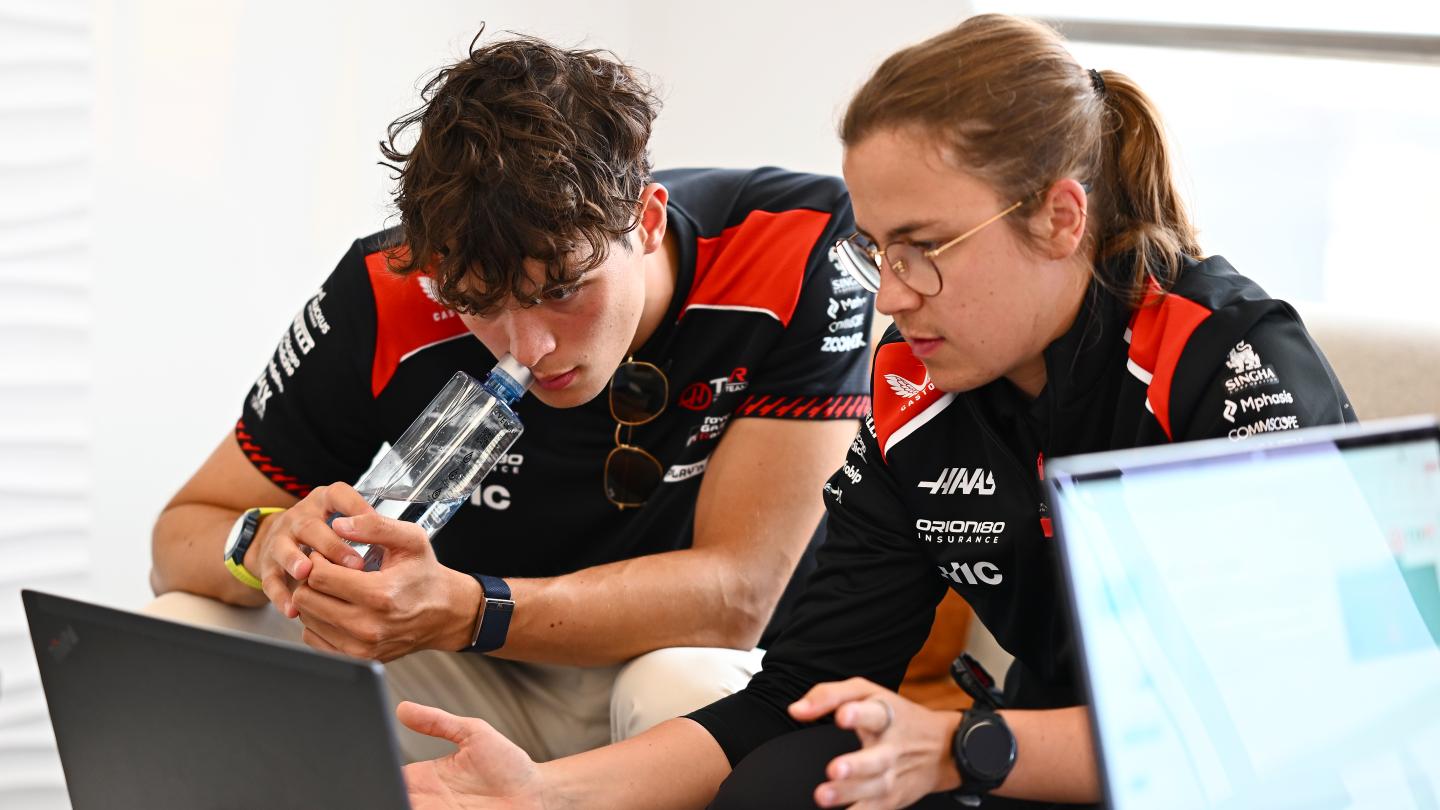
Each team member is vital to the success of TGR Haas F1 Team, ensuring the car is designed, maintained, and operated at peak performance. From those at track to those at the factory, every team member plays a crucial role in achieving results on and off the track.
To mark International Women in Engineering Day, we sat down with Performance Engineer Daniela Klausser to discuss her work at TGR Haas F1 Team – from the detail that goes into car performance to the path that led her into motorsport, and the experiences that have shaped her career.
Can you summarize your role in the team?
“It involves a lot of collaboration with the race engineer, primarily focused on the setup of the car and how that interacts with the driver. As a performance engineer, you’re heavily involved in data analysis, providing options to the race engineer, who then decides what direction to take.
“It also involves analyzing simulations, preparing reports, and making sure that the car we want on track is set up correctly and within the regulations.”
How is a performance engineer different from a race engineer?
“The race engineer communicates more with the number one mechanics, making sure everything is working on their side. They coordinate a number of groups – systems engineers, controls, strategy – in many ways, they’re the head of the ship. They’re also the primary contact with the driver.
“My job as performance engineer is to provide information in a clear way that simplifies the decisions they need to make.”
What inspired you to pursue engineering?
“I originally didn’t want to become an engineer. I studied mathematics because I really liked numbers and I saw it as a foundation.
“In my second year at university the focus shifted more towards insurance mathematics, and after a few internships, I realized I wasn’t happy with the tasks, so I started looking into engineering instead.
“I did a strategy engineering internship at HWA in Germany, and that’s where I felt I’d found something I really enjoyed. It introduced me to motorsport from an engineering angle, and I had to learn a lot of the engineering aspects on the job.”
Was having the chance to experience roles through internships helpful for you in your career progression?
“I think it’s a very natural process. It’s trial and error – if you like something, you continue, but it also helps you realize when something isn’t right for you.
“You shouldn’t be afraid to make changes. Just because you start on one path, it doesn’t mean you have to stay on it.”
What are the most important skills to have as a performance engineer?
“For me, situational awareness is key. Trackside isn’t an environment where you can spend a long time discussing things – if the car needs to be on track in 10 minutes, it has to be ready in 10 minutes. You need to understand when and how to communicate effectively.
“I’d also highlight analytical thinking and logic. Every change has a consequence – nothing happens by chance. You need to understand why something has happened and be part of finding that answer.”
What’s the best piece of advice that you’ve received?
“A previous boss once told me, ‘don’t focus too much on results – focus and be invested in the process.'
“There’s always something to learn, and no one gets things perfect from the start. If you’re invested in the process, you don’t get overly frustrated when things don’t go your way. Ultimately, getting the engineering process right is what matters.”
What’s been your biggest learning moment?
“You’re always learning when you face something for the first time. When I moved from strategy to performance engineering, I had to understand how the car works from a mechanical perspective.
“When I worked in Formula E as a performance engineer I was thrown into the deep end and told I had to do a simulator session with the driver, despite never having worked directly with a driver before.
“That initial learning curve is always the biggest. It’s like learning to read at school – it’s one of the most important steps."
What’s been the most rewarding moment in your career so far?
“Winning the FIA Formula E World Championship with Mercedes-EQ Formula E Team was a huge achievement and will always be a special moment. It was a team effort and something we built together.”
Do initiatives like International Women in Engineering Day help shine a light on women in STEM careers?
“It helps make these roles more visible. If my experience can encourage someone else to take that step into STEM, then I’m really happy.”