Staff Spotlight: Sandra Gomes, Talent Acquisition Coordinator
July 21, 2026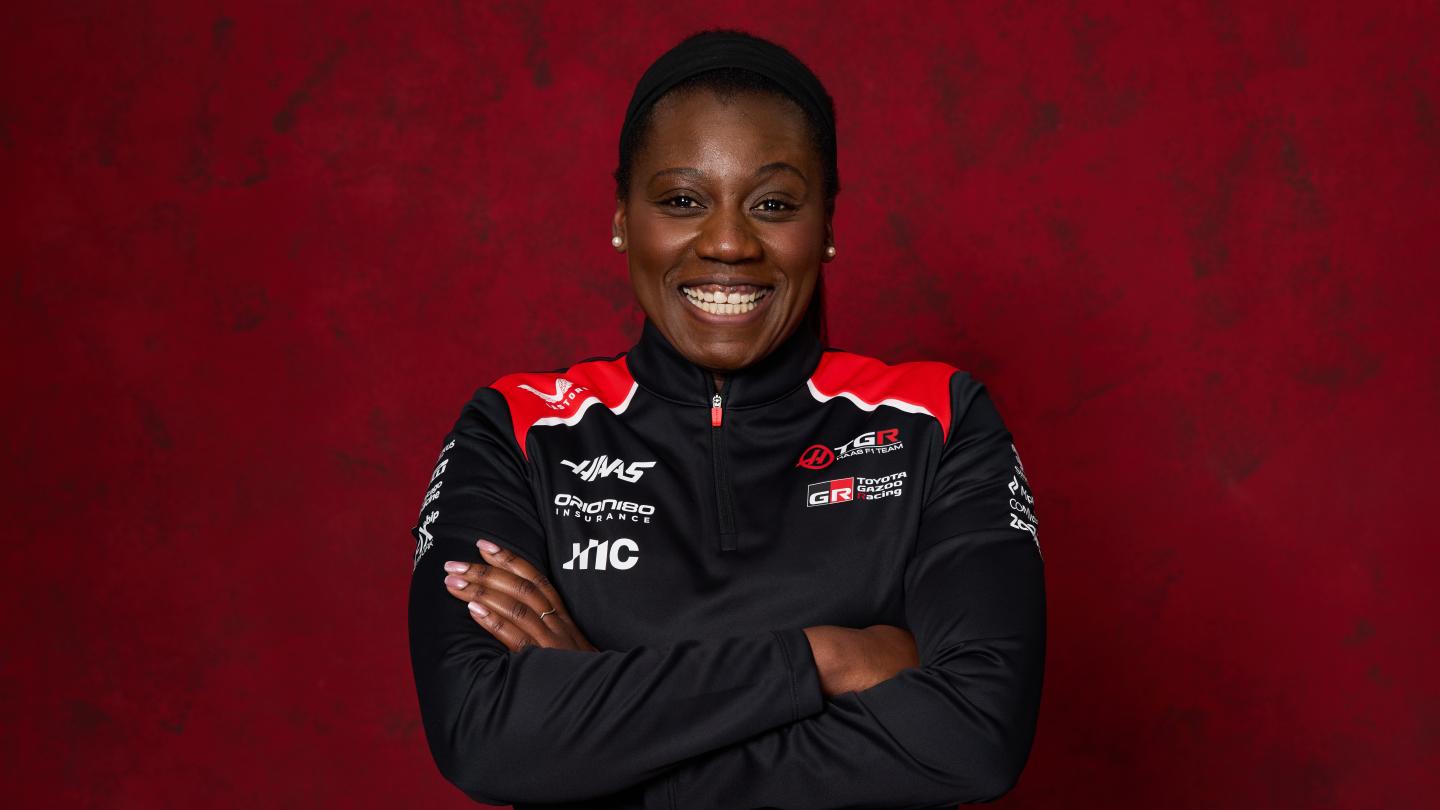
Each team member is vital to the success of TGR Haas F1 Team, from those at track to those at the factory, every team member plays a crucial role in achieving results on and off the track.
In this installment of Staff Spotlight, we speak to Talent Acquisition Coordinator Sandra Gomes about her journey into HR, recruiting in one of the world’s most demanding industries, and what it takes to build a career in Formula 1.
Can you summarize your role?
“My role is very varied, which is one of the things I enjoy most about it. No two days are the same, and what you plan at the start of the day may have completely changed two hours later.
“In general though, talent acquisition supports the recruitment process, making sure that we attract and hire the best talent for every role. In an elite sport like Formula 1, the expected standard is incredibly high, so we need people who can match that level.
“A big part of my job is coordinating interviews, keeping things moving, and making the process as smooth as possible for everyone involved. We want candidates to have the best possible experience, while also making sure managers can focus on their day-to-day work. It requires organization, attention to detail and flexibility, because priorities can change very quickly.”
Do you focus on a specific area of the business for recruitment?
“As we’re a smaller team, we support recruitment across the entire business rather than focusing on one specialist area. Larger teams may have separate talent acquisition teams for areas like technical or commercial, but in our case we need broad experience and the ability to support whoever in the business needs us.”
What skills are most important in your role?
“Communication skills are essential. You need to know how to communicate with people properly, especially candidates, because you’re representing the team throughout the process.
“Organization is also very important. Each talent acquisition coordinator can be working on eight to 12 roles at the same time, and some of those roles may involve several interviews. You need to know exactly what stage each job is at and keep everything moving.
“Attention to detail matters too. In a fast-paced environment, mistakes can happen, so we need to be the people who make sure everything happens at the right time and in the right way.
“You also need a people-focused mindset. Recruitment is all about building relationships, including with candidates that may not be successful the first time. Occasionally someone misses out because another candidate has scored slightly higher, but they might be a great fit for a vacancy in the future. If we’ve already built a relationship with this candidate and they’ve had a positive experience with us, then they’re much more likely to come back.”
How did you get into HR and talent acquisition?
“My journey wasn’t straightforward. I’m from Portugal, and when I finished high school I didn’t have any plans to work in HR. I went on to study journalism at university, partly because I’d volunteered at a local radio station and it felt like a natural choice.
“I worked as a journalist for a while, then decided to travel, which is what I’d wanted to do after high school. I went to Spain, France and eventually came to the UK. At first, I thought I’d only stay for six months or a year, but then I realized I wanted to stay.
“I found my way into recruitment where I had the opportunity to travel and meet people in STEM roles. That’s where I started to build technical understanding which has become useful for my current role.
“During the pandemic in 2020 I took a fixed-term role supporting the onboarding process for the NHS COVID vaccination program. While I was there, the HR manager started giving me more insight into HR, and by the end of my contract, she asked if I would be interested in a full-time HR role, which I accepted.
“It exposed me to different areas of HR, including recruitment and employee relations, and over time, I realized recruitment was the area I enjoyed the most. After completing my CIPD qualification, I updated my profile on a job board and started receiving notifications about companies looking for someone with my skills and professional background, including two Formula 1 teams."
What made you choose motorsport?
“I wasn’t specifically chasing a role in motorsport, I was attracted to the HR and talent acquisition project that was presented to me. It matched what I wanted to do and where I wanted to develop after completing my qualifications.
“The fact that it happened to be within an F1 team was exciting, but it wasn’t something I’d planned. I wouldn’t have believed someone if they said I’d end up working in Formula 1.
“That’s why I think transferable skills are so important. You may not always see how your experience can apply in different industries, but sometimes it fits much better than you expect.”
What do you look for in future hires?
“Technical skills are the first thing we assess, because candidates need to match the requirements of the job description first and foremost.
“However, transferable skills can be very valuable too, particularly in roles where experience from another industry can be carried across. For engineering or mechanical roles, motorsport experience in other categories can be helpful.
“Beyond skills, we look for a strong work ethic, values that align with our organization, adaptability and the ability to work as part of a small team. In this environment, you have a job description, but if something happens and the team needs help, you jump in, so having that mindset is very important.
“It does help to have an understanding of Formula 1, in particular knowing the demands of the sport and the environment that you’re joining.”
What makes working in Formula 1 unique from a people perspective?
“There are many things that are similar to other organizations, but what feels unique in Formula 1 is that everyone is working towards the same goal. Whatever your role is, the main objective is to help the team perform on race weekends. It creates a strong sense of unity and accountability as you know that the work you do can have a direct impact on what happens at the track.
“The pace is also different. I’ve worked in fast-paced environments before, but F1 is on another level as things can be changing constantly. The speed can be challenging at times, but it also makes things exciting.”
What advice would you give someone hoping to work in Formula 1?
“Be persistent and proactive. It’s a very competitive industry, so it’s important to build experience and develop transferable skills. If you don’t achieve your goal of F1 straight away, don’t see it as the end as there may be another route or another entry point that helps you get your foot in the door.
“Soft skills are just as important as technical skills. Teamwork, communication, flexibility and adaptability matter a lot, especially in a small organization. You need to be able to work with people, communicate well and support the wider team when needed.”